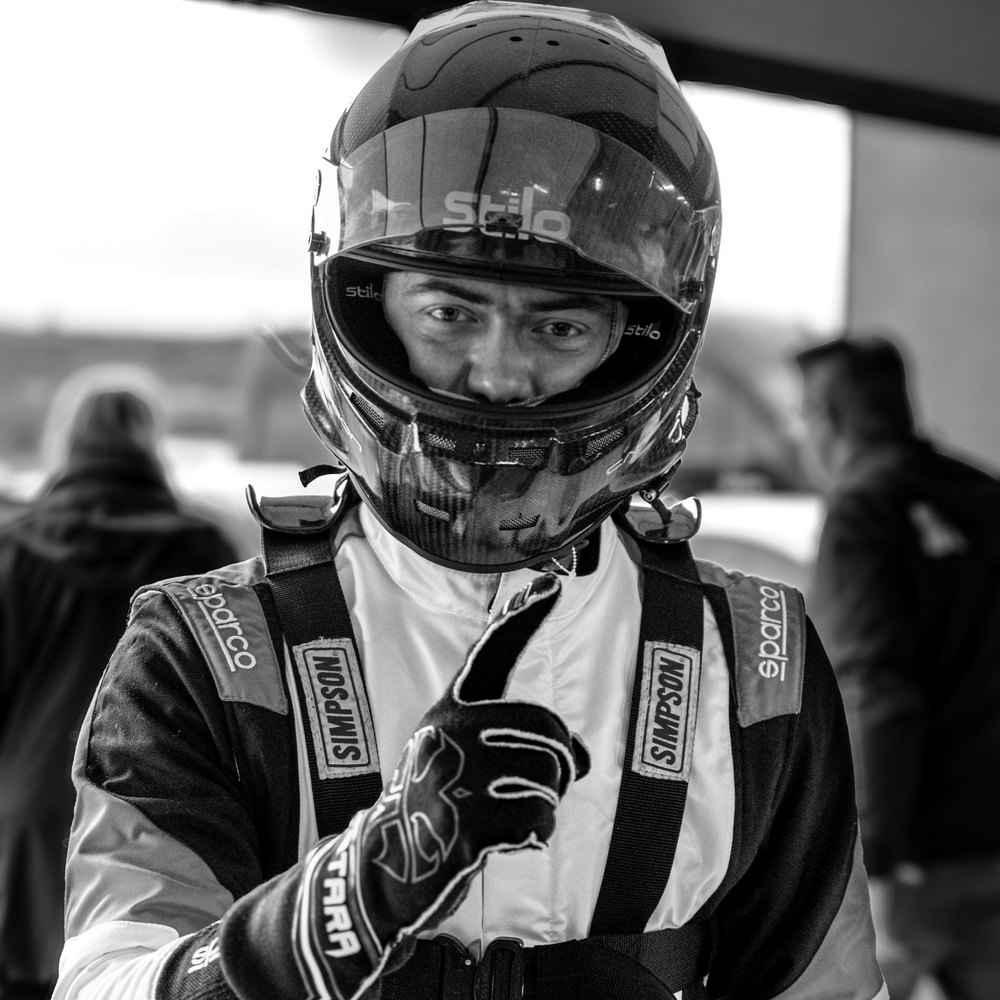
I've been on both sides of this problem: the karting years where my family carried nearly everything, and the car racing years where the season only happened because five different sources of money landed in the right order. Funding a season is a project in itself, and the drivers who treat it like one are usually the drivers still racing three years later. Here is the complete funding stack I use, what each source can realistically carry, and how to plan it so one bad quarter doesn't end your year.
Start with the real number, not the hopeful one
Before you can fund a season you need an honest total. Get written quotes from at least two teams, add 15 percent for damage and unplanned testing, then add your own travel and hotels, because team quotes almost never include them. Rough ranges I see in the paddock right now:
| Level | Typical season budget |
|---|---|
| Club car racing | €10,000 to €30,000 |
| National karting (IAME X30, Rotax Max) | €25,000 to €50,000 |
| European karting (OK, OK-Junior) | €80,000 to €150,000 |
| National F4 | €180,000 to €280,000 |
| GT4 (shared drive to full season) | €120,000 to €250,000 |
| National Porsche Cup | €250,000 to €400,000 |
| GB3 | €400,000 to €550,000 |
| FRECA | €550,000 and up |
If you're still in karting and want the line by line version, I broke down what karting actually costs separately. The short version: the entry fee is never the number. The number is entry plus engines plus tyres plus travel plus the crash you haven't had yet.
The stack: five sources, not one
Almost nobody outside a factory programme funds a season from a single source. A realistic national level budget looks something like 40 to 60 percent family or personal money, 20 to 40 percent sponsorship, and the rest a mix of prize money, scholarships, coaching income and small community fundraising. The exact split matters less than the principle: every extra source makes you harder to kill financially. Lose one and the season survives.
Family money: treat it like an investor, not a wallet
Let's be honest, because most articles aren't: below F4, the majority of budgets are family funded. That's not shameful, it's the sport. What separates professional families from stressed ones is structure. Agree a fixed cap before the season, write it down, and never revisit it at the circuit after a bad qualifying. Then report on it like you would to a sponsor: a short monthly summary of what was spent, what was achieved and what is coming. It sounds formal for your own parents, but it does two things. It keeps the January conversations calm, and it trains you to do exactly what a paying partner will demand later.
Sponsorship: slow to build, compounding once it works
Sponsorship is the only source on this list that can grow year over year, and the only one almost every driver starts too late. Companies plan marketing budgets in the autumn, so if your first email goes out in February you're asking for money that was allocated months ago. Start in September for the following season. Be realistic about deal sizes: a first karting partner is typically €1,000 to €5,000, a national car racing partner €5,000 to €25,000, and a genuine anchor partner in GT4 or a Porsche Cup can reach six figures, but those deals take years of relationship building. Expect to contact 80 to 120 companies to close three to five deals. The full method is in my guide on how to get a motorsport sponsor, and the email side alone is worth studying, because most outreach dies in the first sentence. I got frustrated enough with spreadsheets of half-tracked leads that I built a sponsor finder and pipeline into DriversPerformance, but whatever tool you use, the rule is the same: sponsorship is a numbers game played with personal messages, and the pipeline has to run every week, not just in winter.
Prize funds, shootouts and academies
Free money exists in racing, but it's concentrated and competitive. Win a national Rotax Max title and the Grand Finals ticket covers a large part of a world level event that would otherwise cost a fortune. Manufacturer shootouts, like the junior shootouts run around national Porsche Cup series, award support packages that can be worth six figures to one driver a year. Programmes such as Team USA Scholarship, the Richard Mille Young Talent Academy and various federation academies cover meaningful chunks of a season for a handful of drivers. Some championships pay a prize fund toward the next step, for example feeder series winners getting credit toward a GB3 or FRECA drive. Two rules. First, never build your budget on winning a prize; treat every scholarship as upside, not income. Second, treat applications like a race weekend: put every deadline in your calendar in August, prepare properly, and apply to everything you're eligible for. A shootout entry fee of €300 to €1,000 is one of the best value bets in motorsport.
Coaching income: the most underrated line on the sheet
From about 16 onward, you're qualified to sell what you already know. Senior karters coach cadets and juniors for €150 to €300 a day at most clubs. Sim coaching sells for €40 to €80 an hour and you can do it on school nights. Data debriefs, track walks at your home circuit, helping a rookie parent choose equipment: all billable. A consistent driver can add €3,000 to €8,000 a year this way, which at karting level is a real percentage of the budget. Just as valuable, coaching puts you in front of exactly the families and club sponsors who fund the lower levels of the sport, and it gives you invoices, which matter more than you think, as we'll get to.
Crowdfunding: works for a story, fails for a wish
Crowdfunding has a terrible reputation in racing because most campaigns are "help me fund my season", which gives a stranger no reason to care. What works is a specific, finite, emotionally clear ask: the entry fee for one shootout, the flights for the Grand Finals you already qualified for, one wildcard round in front of a home crowd. Add real rewards: name on the kart for a season, a monthly behind the scenes video, a hospitality day at the track. Campaigns like that raise hundreds to a few thousand euros, and locally organised versions, a club night, a karting evening for supporters, often beat the platforms because the audience already knows you. It will never carry a season. It can absolutely close a specific gap.
Plan the money per quarter, not per season
Racing money is lumpy. The spending peaks in the first half of the year while sponsor money often arrives late, and that mismatch, not the total, is what kills most seasons. My quarterly rhythm:
- October to December: lock the team deal and pay the deposit, run the heaviest sponsorship outreach of the year while companies set budgets, and apply for every scholarship and shootout with a winter deadline.
- January to March: the expensive quarter. Testing, licences, kit and the first rounds land together. Invoice every sponsor before the first race, not after it.
- April to June: compare actual spend to plan after every round. If you're more than 10 percent over by June, act now, not in August.
- July to September: finish the season, but start next year's conversations before this year's results go stale. A September meeting with a warm sponsor beats a January cold email by a mile.
Keep a 10 percent contingency outside the plan and don't touch it before the summer. Every season I've seen up close needed it.
A written budget wins sponsor trust
Here is the part most drivers miss: your budget isn't just an internal document, it's a sales document. When a business owner asks "where does my money actually go" and you slide over one clear page, cost per round, what is already funded, what their contribution buys, the conversation changes completely. You stop looking like a kid asking for a favour and start looking like a small business offering a partnership. The same discipline applies after the deal: send proper invoices, handle VAT correctly, deliver a short report each quarter. Sponsors renew with drivers who behave like businesses, and renewals are where sponsorship stops being exhausting. This is exactly why I put quotes, invoicing and season budget tools alongside the outreach side when I built my own platform: the money admin and the sponsor relationship are the same job.
Surviving a mid-season shortfall
Almost every driver hits a gap eventually. A crash, a sponsor paying late, a testing bill that ran away. The order of operations matters:
- Get the exact number. Recount actuals against the plan the day you suspect a problem. "About ten grand short" isn't a number you can act on; €8,400 is.
- Cut testing before races. Test days are the most discretionary spend in the budget. Races produce results, exposure and sponsor deliverables; a private test produces none of those.
- Talk to the team early. Teams would rather restructure your payment schedule than lose a committed driver in July. Silence, then a missed payment, burns the relationship. A phone call in week one usually finds a solution.
- Go to existing partners with a small, specific ask. A current sponsor who is happy will often bridge €1,000 to €2,500 for a named cost, especially with extra deliverables attached. Cold outreach mid-season rarely lands in time.
- Skip a round if you must, but choose which one. Protect the events that matter for your next step: the rounds scouts attend, your home race, the finale. Missing a mid-pack away round hurts far less than a debt hangover.
- Never borrow against next season. A season finished early and cleanly is recoverable. A season finished with debt eats the following year before it starts.
The practical move this week: write down your real season number, list every source in your stack with an honest amount next to it, and put three funding actions in your calendar with deadlines, one sponsorship task, one scholarship application, one income idea. Funding a season isn't one big cheque, it's forty small decisions made early. The drivers who make them in September are the ones who spend March thinking about braking points instead of bank balances.