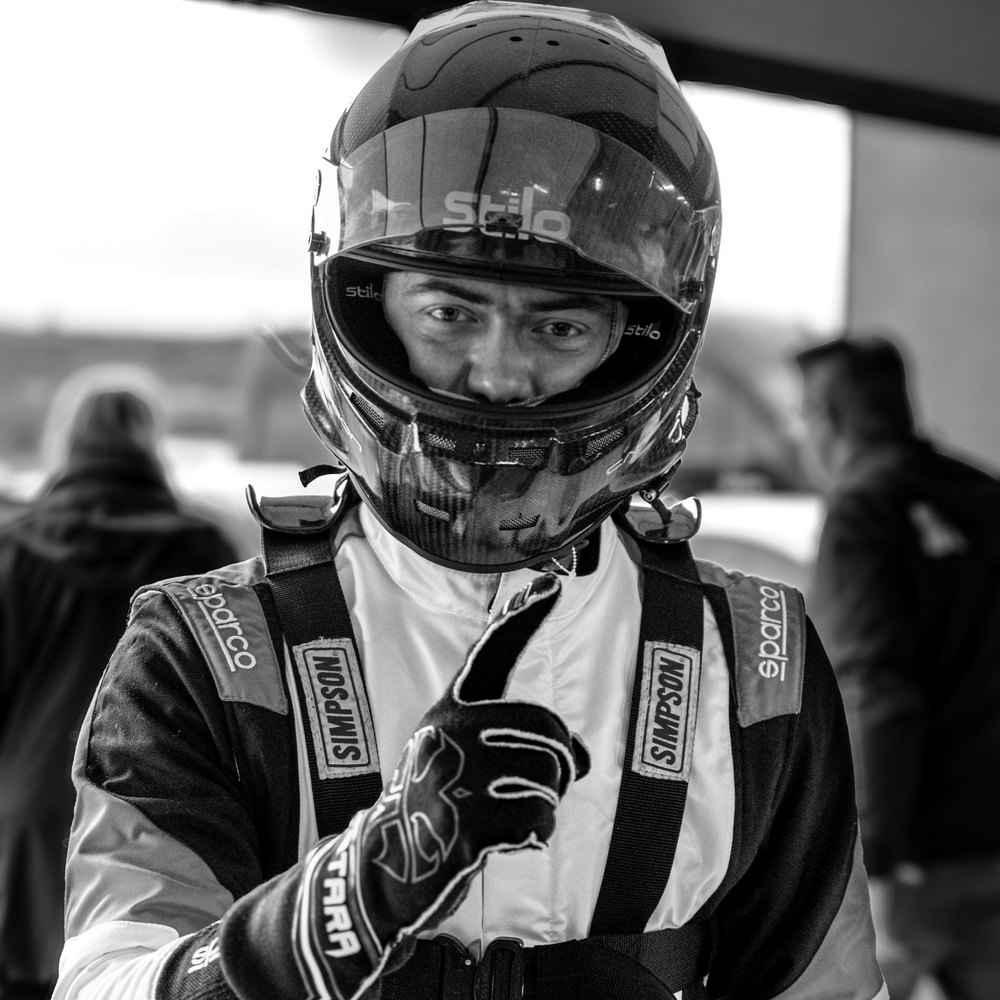
I sent my first sponsorship email when I was fifteen, karting in the Netherlands and convinced that any company would jump at the chance to put a sticker on my IAME X30. I sent about a hundred of those emails. I got two polite rejections and ninety-eight silences. Over the years since, chasing budget for karting and car racing, I slowly worked out what I was doing wrong, and the short version is this: I was asking for a donation when I should have been selling a product.
This is the guide I wish someone had handed me in that paddock. It covers what sponsors actually pay for, why most drivers never get a reply, how to build a target list that converts, what to offer at every budget level, what realistic conversion numbers look like, and how to keep a sponsor for more than one season. None of it is theory. All of it comes from emails I sent, meetings I sat in, and deals I closed or lost.
What sponsors actually buy
Nobody outside your own family gives you money because you are quick. Being quick is the minimum requirement, not the product. A company that sponsors you is making a marketing purchase, and in my experience they are buying one or more of four things.
- Exposure. Their logo in front of an audience they care about: your livery, your race suit, your social channels, local press coverage. Be honest with yourself about the size of this. A club race in front of three hundred people is not a media buy, and a smart company knows it.
- Hospitality. Paddock access, a garage tour, a spot at the pit wall, a karting day for their staff, and above all a place to bring their own clients. A GT4 or Porsche Cup weekend is a genuinely good corporate day out, and companies pay serious money for good corporate days out.
- B2B network. Introductions. Your other partners, your team owner, the businesses backing the other drivers on the grid. I have seen a 5,000 euro sponsorship pay for itself because the sponsor met one new customer at a race weekend.
- Content. Photos, onboard footage, behind-the-scenes video, a driver who shows up at their trade fair booth. Marketing teams are permanently hungry for material, and a season of racing produces a lot of it.
The classic mistake is leading with exposure when you race in club events. At national karting and club racing level, hospitality and network are usually worth far more than your sticker space. Sell those first and treat the logo as the bonus.
Why most drivers get ignored
A marketing manager at a mid-sized company sees sponsorship requests every month, from football clubs, festivals, charity runs and drivers. Most of ours go straight to the bin for the same five reasons.
- Asking instead of offering. "My season costs 30,000 euro and I am looking for support" is a request for charity. "For 4,000 euro you get these three things" is a proposal a manager can take to their boss.
- Generic mass emails. If your first paragraph could be sent to any company in the country, the reader knows it, and deletes it. I wrote a separate piece on writing sponsorship emails that get replies, because this single point kills more deals than everything else combined.
- Targeting the wrong companies. Emailing Red Bull and Rolex is a waste of effort. They have agencies, contracts and waiting lists. The company that actually says yes is the regional firm whose owner likes racing and has never been asked properly.
- No price and no deliverables. Vague proposals create work for the reader. If they have to email you back just to find out what it costs, most will not bother.
- No follow-up. One email, then silence. Half of my deals came from the second or third contact, not the first. People are busy, not uninterested.
Fix those five and you are already ahead of ninety percent of the grid. A structured, priced, well-aimed sponsorship proposal reads like a business document, and businesses respond to business documents.
How to build a target list
The best sponsor is a company with a reason to say yes before you ever walk in. Your job is to find a hundred of them. Here is the order I work in.
- Start close to home. Companies your family already knows, businesses owned by parents of other drivers, your karting shop's suppliers, the firms on the industrial estate next to your home circuit. Warm beats cold every single time.
- Look for companies that already spend on visibility. The firm with branded vans, boards at the local football club, or radio ads has a marketing budget and a habit of spending it. You are not creating a budget line, you are joining one.
- Match what they need to what you have. A B2B firm (logistics, construction, machinery, software) mostly wants hospitality and introductions. A consumer brand wants reach and content. Read their website before you decide what to lead with.
- Prefer regional over national. At a 40-person company, the owner can decide over one coffee. At a multinational the request enters a process, and processes say no by default.
- Find the decision maker. At small and mid-sized companies that is the owner or managing director, by name. An email to the info@ address is an email to nobody.
A list of 100 to 150 researched companies is enough for a full winter of outreach. I built the sponsor finder in DriversPerformance around exactly this workflow, a database of potential partners plus personalised outreach emails and a pipeline, because doing it in spreadsheets ate two entire off-seasons of my life. Whatever tool you use, the principle stands: research beats volume.
What to offer at each budget level
Set your prices before anyone asks, and put them in writing. Companies do not want to guess what you cost, and a package structure makes you look like a supplier instead of someone with their hand out. These brackets have worked for me and for drivers I know from karting up to GT level.
| Package | Typical price | What the sponsor gets |
|---|---|---|
| Supporter | 500 to 1,500 euro | Logo on the kart or car and race suit, social media mentions, end-of-season photo pack, invoiced properly |
| Partner | 2,500 to 5,000 euro | All of the above, plus two race-day invitations with paddock access, monthly content they can repost, LinkedIn posts tagging the company |
| Main partner | 7,500 to 20,000 euro | Prominent livery position, hospitality for their clients at selected rounds, a karting day for their staff, dedicated video content, quarterly reporting |
| Title partner | 25,000 euro and up | Naming rights, a full-season hospitality programme, active B2B introductions, driver appearances at company events, content production all year |
Scale the numbers to your racing. A national IAME X30 or Rotax Max season runs roughly 25,000 to 45,000 euro, so a 5,000 euro partner is a meaningful slice. An F4 season costs 160,000 euro or more, FRECA and GB3 several times that, so at car level a budget is nearly always five to fifteen partners stacked together rather than one big cheque. I broke down how those stacks come together in how to fund a racing season.
Realistic conversion numbers
Here is what nobody tells you at the start: the numbers are brutal, and the work is still worth it. From my own campaigns and from comparing notes with other drivers, a well-run outreach effort looks roughly like this.
- 100 personalised emails to researched companies produce 15 to 25 replies of any kind.
- Of those replies, 5 to 10 turn into a phone call or meeting.
- Of those meetings, 1 to 3 become paying deals in year one.
Warm introductions are a different sport entirely. When someone the owner trusts makes the connection, I close roughly one in three. This is why the network you build while racing matters so much, and why every existing sponsor should be asked, politely, who else they know.
Run the maths backwards and the workload becomes clear. If you need 20,000 euro and your average deal is 3,000 euro, you need around seven deals, which means several hundred cold contacts or a much smaller number of warm ones, spread over a winter. Timing matters just as much: most companies set next year's marketing budget between September and December. Start your outreach in September and you are asking to be included in the budget. Start in February and you are asking them to break it.
How to keep sponsors for multiple seasons
Winning a sponsor costs you dozens of hours. Keeping one costs a fraction of that, yet most drivers put all their effort into the chase and none into the relationship. Renewal is where a racing budget stops being a yearly crisis.
- Deliver more than you promised, and prove it. Send an end-of-season report: photos of their branding in use, content delivered, guests hosted, press clippings, social numbers. Their marketing manager needs that document to justify the spend internally, so write it for them.
- Behave like a supplier. Proper quotes, proper invoices, sent on time, with their company details correct. It sounds trivial, but companies renew suppliers who are easy to work with, and paperwork is where most drivers look like amateurs.
- Communicate in the off-season. If the only email they ever get from you is the renewal ask, you are a cost. Share your winter training, your plans for next year, an introduction that might help them.
- Bring them business. One introduction that becomes a customer can outweigh every logo you ever carried. Ask your sponsors what kind of clients they want, then look for those people in every paddock you visit.
- Ask early, with a plan. Renew in October with a concrete proposal for next season, including what improves for them. Do not let the question drift into January.
My longest partnership started as a 1,500 euro logo deal and grew for four straight seasons, not because my results suddenly exploded, but because renewing me was the easiest decision on that owner's desk each autumn.
If you take one action after reading this, make it small and concrete: tonight, write down twenty companies that fit the profile above, find the owner's name for each, and send the first three personalised emails this week. The drivers on any grid with the best backing are almost never the fastest ones. They are the ones who treated finding a motorsport sponsor as a sales job, did the boring work every week, and kept doing it after the tenth silence. Start the list.