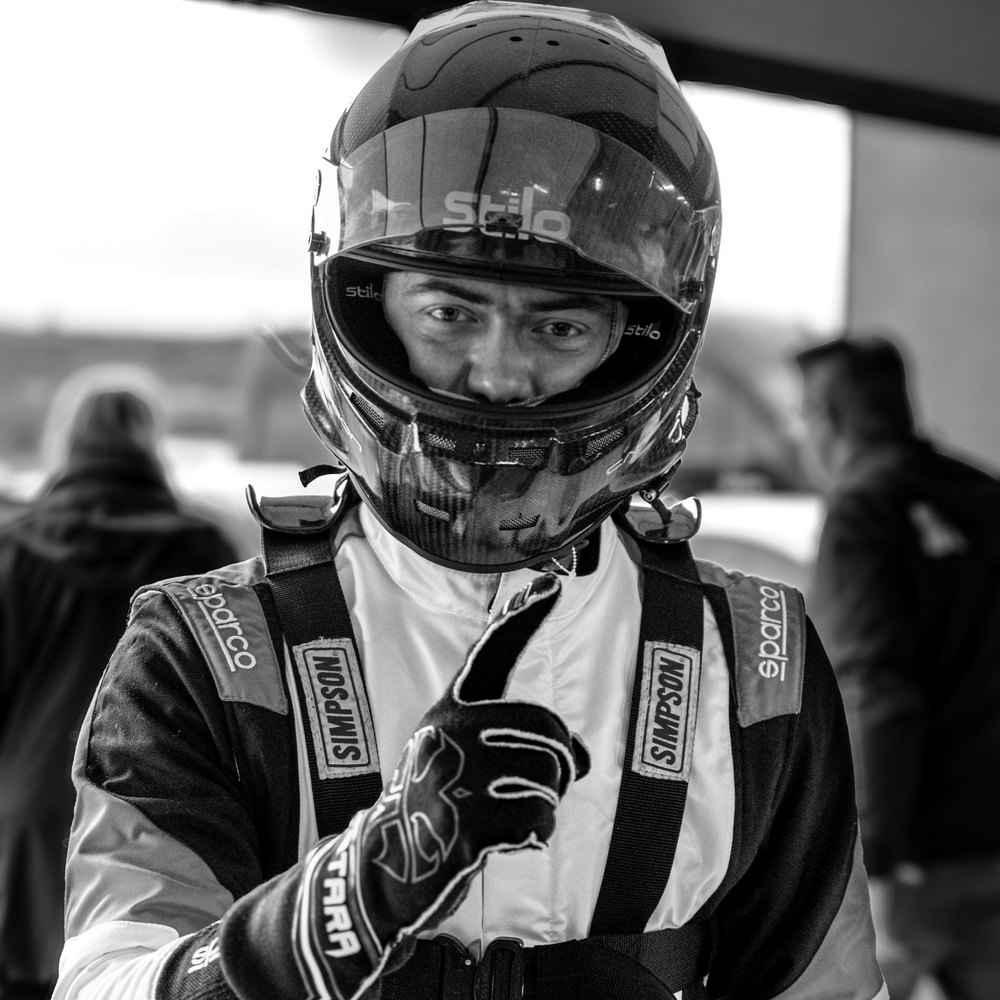
The first sponsorship proposal I ever sent was eleven pages long. Nine of those pages were about the kart, the engine, the tyres and the championship format. Two were about me. Zero were about the company I sent it to. It got, predictably, no reply. I have rewritten that document every season since, from national karting into cars, and the version that finally started converting looks nothing like the first one.
The penny dropped after a few seasons of silence: a motorsport sponsorship proposal is a business document, not a fan brochure. The person reading it is a marketing manager or a business owner who thinks in visibility, leads and staff engagement. Your lap times are context. The product is what their company gets out of the partnership. Below is the exact structure I use now, what goes on each page, how to price the packages, and the mistakes I made so you can skip them.
Why most proposals never get read
Three mistakes kill almost every driver proposal, and I have made all three.
The 20-page PDF about the car. Sponsors do not buy horsepower. A marketing manager gives an unsolicited proposal about thirty seconds before deciding whether to keep reading. If those thirty seconds are spent on chassis specifications and a history of the series, you are done. Technical detail belongs in a conversation with someone who asks for it, not in the document that has to earn that conversation.
No prices. "Packages available on request" feels safe, but it forces another email exchange before anything can happen, it signals that you do not know your own value, and it makes internal budget approval impossible. Nobody walks into their director's office saying "I want to sponsor a driver, no idea what it costs." Put real numbers on the page.
No business case. Most proposals explain in detail what the sponsor gives the driver and never what the sponsor gets back. If the reader cannot find a single sentence written from their side of the table, the document goes in the bin. Every page below exists to fix exactly this.
The structure, page by page
My working proposal is six pages: a cover with one strong image, then five content pages. Each page answers one question a sponsor actually has. If a page does not answer one of these questions, it gets cut.
Page one: who you are
One page, no more. Name, age, class and series (IAME X30 Senior, Rotax Max, Spanish F4, GT4 European Series, your national club championship, whatever applies), your current championship position or last season's result, and one sentence on where you are heading. Use your best photo, and make it one where your face is visible, not a distant shot of the kart. Companies sponsor people, not equipment. If you have a genuine story angle (youngest driver in the field, a family team beating factory outfits, an engineering apprenticeship alongside racing), it goes here in two sentences. Not two pages.
Page two: audience and reach
Real numbers only. Instagram followers and average reach per post, TikTok views, YouTube subscribers, email list, local press coverage, paddock footfall. Small honest numbers beat inflated ones, because sponsors check. If you race a ten-round national championship with roughly 2,000 paddock visitors per weekend, that alone is 20,000 in-person impressions per season, and for a regional business that can matter more than followers.
Pull demographics from your Instagram insights: age, gender, location. Then match the data to the reader. A regional accountancy firm cares that 60 percent of your audience lives within 50 kilometres. A helmet or energy drink brand cares that your audience is 16 to 34. Same numbers, different sentence on the page depending on who receives it.
Page three: packages and pricing
Three to five tiers, each with a clear euro price and clear deliverables. The rule that took me longest to learn: every deliverable must be concrete and countable. "Social media exposure" is not a deliverable. "Two dedicated posts per race weekend, tagged, plus your logo in every results post" is a deliverable. "Hospitality" is vague. "Four paddock passes at three rounds of your choice, including a garage tour" is something a marketing manager can picture and defend internally. Pricing itself is covered in the next section.
Page four: activation ideas
This is the page that separates you from every other driver asking for money, and almost nobody includes it. Activation means the sponsor actively uses the partnership instead of just having a logo on your bodywork. Ideas that have worked for me and drivers around me: a karting day for the sponsor's staff or best clients with you setting up the karts and doing coaching, your kart or car on display at their trade fair stand or showroom opening, a content day where you shoot material featuring their product for their own channels, a discount code for your followers if they sell direct to consumers.
Write three specific ideas tailored to that company's industry. This is the page that turns "nice kid, no budget" into "we could actually use this at our summer client event."
Page five: ROI reporting
Tell them, before they ask, how you will prove the money was well spent. My format is a short report after every second round: photos with the logo clearly visible, social statistics with screenshots, press mentions, plus an end-of-season summary document. The person who signs your deal usually has to justify it to their own boss in January. Hand them that ammunition all season and your renewal conversation becomes short. My renewal rate jumped the year I started sending reports without being asked, with the exact same on-track results as the season before.
How to price your packages
Work backwards from your season budget. Some honest anchor points from the paddocks I know: a club karting season runs roughly €5,000 to €12,000, a national IAME X30 or Rotax Max campaign €25,000 to €60,000, OK at European level considerably more. In cars the step is brutal: an F4 season is roughly €250,000 to €400,000, GB3 and FRECA sit well above that, a shared GT4 seat €120,000 to €200,000, and a national Porsche Cup campaign €200,000 plus. No single company covers numbers like that at entry level, which is why the ladder matters: many small partners, a few mid-size ones, one or two big ones. I wrote separately about combining sponsors, prize money and side income into a full season budget.
Three pricing rules I follow. First, the bottom tier must be low enough that a local business owner can say yes without a board meeting; in most countries that means under €1,000. Second, the top tier should represent 10 to 25 percent of your season budget, because a title partner wants to feel like a title partner. Third, when a sponsor pushes back on price, add deliverables instead of cutting the number. A discount teaches them the list price was fiction; an extra activation day teaches them the package is worth the number on the page.
Here is an example ladder for a national karting programme with a season budget around €45,000. The structure scales directly: for F4 multiply the numbers by roughly five, for GT4 by three to four, and keep everything else identical.
| Package | Price per season | Core deliverables |
|---|---|---|
| Supporter | €750 | Logo on the kart, mention in every results post, invite to one race weekend |
| Bronze | €1,500 | Logo on kart and race suit, one tagged post per month, two paddock invites |
| Silver | €3,500 | Prominent kart and suit placement, two dedicated posts per round, quarterly report, staff karting session |
| Gold | €7,500 | Helmet and suit placement, content day for the sponsor's own channels, hospitality at three rounds, full season reporting |
| Title partner | €15,000 | Naming rights and livery integration, client activation day, all Gold deliverables, first option on next season |
One warning from experience: never publish a price you would not actually accept. If €750 does not cover the cost of the sticker, the invites and your time, the tier is set wrong and every deal at that level quietly costs you money.
What your one-pager should contain
The six-page proposal is not the first thing you send. Cold contact gets a one-pager, and the full document comes out once someone shows interest. My one-pager contains exactly this:
- Header with name, series, season and one strong photo
- Three lines on who you are and your current result
- An audience snapshot: three or four numbers, nothing more
- A price range, phrased as "partnerships from €750 to €15,000 per season"
- One activation example written for their industry specifically
- Contact details and one clear next step, usually a fifteen-minute call
The one-pager exists to earn a conversation, not to close a deal. Keep it under 200 words of actual text. If you cannot fit your case on one page, the case is not sharp enough yet, and no amount of extra pages will fix that.
Tailor it or do not send it
The same PDF blasted to a hundred companies converts worse than ten tailored versions sent to the right ten. Tailoring means their logo mocked up on your kart or car (ten minutes in any design tool), page one referencing their business in one sentence, and page four containing activation ideas that only make sense for their industry. Choosing those ten companies well is its own craft; I covered my full approach in how to get a motorsport sponsor. After too many seasons of digging through company registries and tracking outreach in a spreadsheet, I ended up building a sponsor finder with a proper outreach pipeline into DriversPerformance, mostly because I needed it myself.
Remember the proposal never travels alone. It arrives attached to, or linked from, a short personal email, and that email decides whether the document gets opened at all. There is a specific way to write a sponsorship email that actually gets a reply, and it is worth getting right before you send anything.
If you want a practical starting point for this week: write page two first, because gathering honest audience numbers takes the longest. Then build the package table, then the one-pager, and send that one-pager to five companies you have a real connection to, a local business you use, a brand run by someone from your club, a company whose customers look like your paddock. Five tailored sends beat fifty generic ones every single time, and the full proposal will be ready by the time the first reply lands.