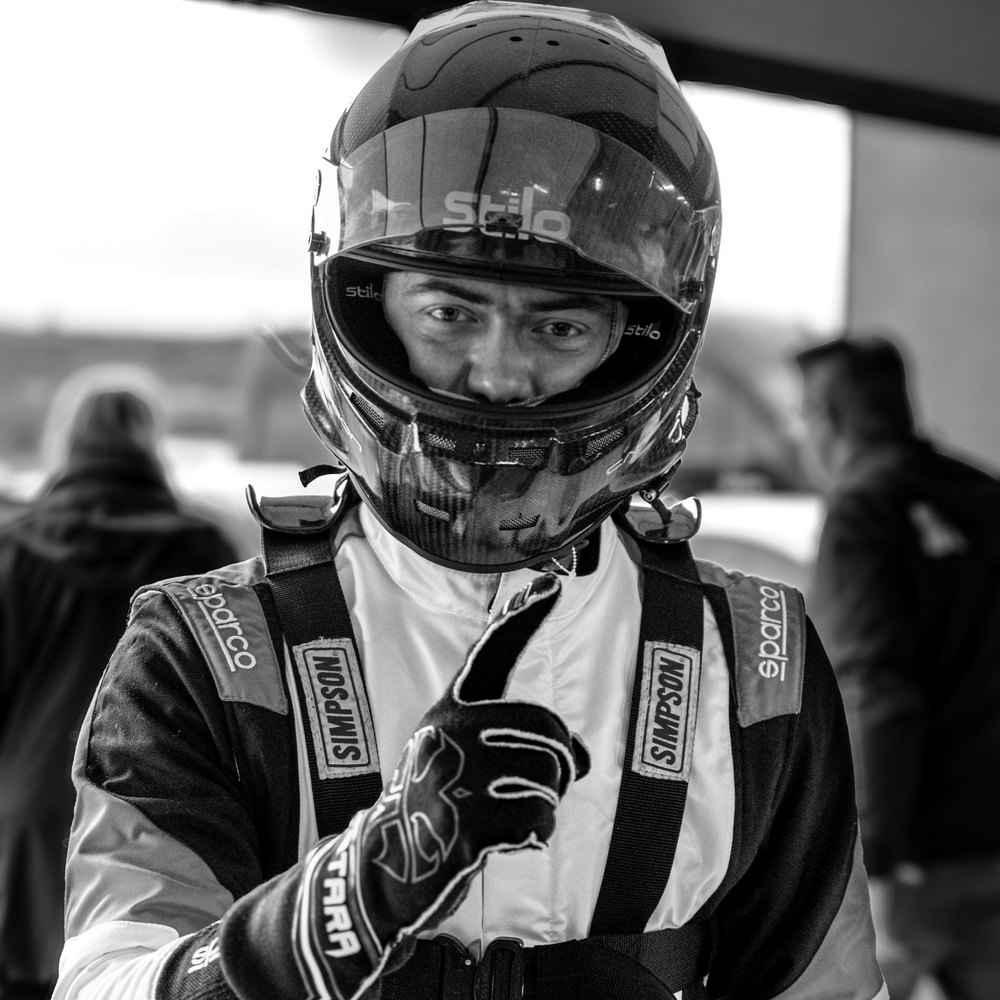
I made this jump myself, and I have since watched plenty of karting families get the karting to Formula 4 step wrong in both directions. Some move too early because a team manager promised them the moon in a hospitality tent. Others wait two seasons too long because the numbers scared them, then arrive at 17 racing rookies who are 15, with the same budget pressure and less time to grow. Here is the honest version of the decision: readiness, real costs, how to pick a team, the superlicence maths, and what to do when the budget simply is not there.
When you are actually ready
The FIA minimum age for F4 is 15, and for most drivers that is also roughly the right age. The typical route is two or three strong seasons in senior karting (IAME X30 Senior, Rotax Max Senior, or OK if you are on the CIK ladder) and a move in the winter you turn 15 or 16. Move at 18 or 19 and the maths of the single seater ladder starts working against you. Not because you cannot drive, but because teams and sponsors read age as runway.
Results matter more than birthdays. My benchmark: you should be a consistent front runner in a competitive national senior class, and you should have shown speed at least once at international level. A top 15 in an IAME Euro Series final, points at a Rotax Max Euro Trophy round, or honest midfield pace in OK European Championship heats all count. You do not need to be world champion. F4 grids are full of karters who won everything nationally and karters who were quick but unlucky. What car teams actually look for is raw one lap pace, consistency over a race distance, and how fast you adapt to a new track in the wet.
One more honest test. If you are only quick in your own kart, on your home circuits, with the mechanic you have had for five years, you are not ready. F4 strips all of that comfort away on the first test day. The best preparation I know is deliberately racing outside your bubble in your final karting season: new tracks, new conditions, borrowed equipment, and at least one international event where nobody knows your name.
What a Formula 4 season really costs
Nobody publishes real prices, so here are the ranges I have seen in actual conversations and contracts across European paddocks. All figures in euro.
| Item | Typical cost |
|---|---|
| Italian F4, front running team, full season | 380,000 to 450,000 |
| Spanish F4, full season | 280,000 to 350,000 |
| British F4, full season | 320,000 to 400,000 |
| F4 UAE winter championship | 130,000 to 170,000 |
| Private test day (car, tyres, fuel, engineer) | 6,000 to 8,000 |
| Pre season test program, 12 to 15 days | 80,000 to 110,000 |
| Crash damage budget (realistic, not optimistic) | 20,000 to 40,000 |
| Travel, hotels, licences, kit for the family | 15,000 to 30,000 |
Add it up and a serious first season in a front running Italian F4 team, with a proper winter test program and a UAE campaign to arrive sharp, lands between 550,000 and 700,000 euro. A leaner but still credible program, say Spanish F4 with ten test days and no winter series, is possible around 350,000 to 400,000. Compare that with 80,000 to 150,000 for a full international karting season (I broke those numbers down in how much karting costs) and you understand why this step ends more careers than any on track result ever does. I wrote separately about how to fund a racing season, because from F4 onwards the funding job is as demanding as the driving job.
Watch out for the headline quote. Teams quote a base season price, and then tyres for private testing, spare parts, extra engineering time and mid season test days arrive as separate invoices. Before you sign anything, ask for a written list of exactly what is included and what triggers a bill. A team that gets vague at that question is telling you something.
One strategic note on the UAE winter series: it is expensive, but for a karter it compresses a year of learning into five weeks. Standing starts, slicks, wings, racing in traffic at 230 km/h, all sorted before the European season begins. If the total budget forces a choice between UAE plus a midfield European team or no UAE plus a top team, I would take the seat time every time in year one.
How to choose a team
The fastest team is not automatically the right team for a rookie. The big operations run five or six cars, and the setup direction and attention flow toward the driver fighting for the title. Rookie development is a different service. When I help a driver evaluate teams, this is the checklist:
- Rookie results, not headline results. Where did their first year drivers qualify and finish last season? A team that turns a solid national karter into a top eight F4 driver is doing better work than a team whose champion arrived ready made.
- A named engineer. Ask who your engineer will be, by name, and how many cars that person runs on a race weekend. "Our engineering group" is not an answer.
- Test before you sign. Two paid test days with a team tell you more than any presentation in any hospitality unit. Keep your signature in your pocket until you have driven for at least two teams.
- Structured coaching. Is there a dedicated driver coach, is video and data review scheduled rather than optional, and do rookies get the same debrief time as the lead car?
- Talk to a paying parent from last year. Not the one the team suggests. Ask about surprise invoices and how the team behaved after a big crash. That conversation is worth more than every brochure combined.
Superlicence points and the career maths
You need 40 FIA superlicence points, collected across three seasons, to qualify for Formula 1. A certified F4 championship pays 12 points to the champion, 10 for second and 7 for third, then a rapidly falling scale. FRECA pays 25 to its champion, FIA F3 pays 30, F2 pays 40. So an F4 title alone gets you nowhere near a superlicence. It buys you a ticket to the next, more expensive round.
Now do the money maths with cold eyes. F4 costs 350,000 to 700,000. FRECA runs 550,000 to 750,000 and GB3 sits around 400,000 to 500,000. FIA F3 sits above a million and F2 above two million. Almost no family survives that ladder on savings, which is why the commercial side has to start in karting or in your first F4 winter, not when the account runs dry at 17. Building a sponsor portfolio at 15 feels absurdly early; at 17 it is already late. This is exactly why I built a sponsor finder with a proper outreach pipeline into DriversPerformance: the drivers who treat sponsorship as a weekly habit are the ones still on a grid at 19.
Be honest about the goal too. The full ladder from F4 to F2 costs four to five million euro and demands title level results at nearly every step. Meanwhile GT4, Porsche Cup and endurance racing offer genuine professional careers for a fraction of that, and manufacturer scouts watch F4 grids closely. An F4 season that produces strong results and a real network is a good investment even if F1 never happens. An F4 season funded by remortgaging the family home on the assumption of F1 is not.
What changes physically and mentally
An F4 car is not a big kart. You gain roughly 100 km/h of top speed, wings that only work when you trust them, a brake pedal that wants 80 kilograms of force instead of a firm toe, and a 30 minute race distance with sustained neck load that karting never produces. Every karter I know underestimated the neck. The first two test days feel fine; day three of a test week is where necks give up and lap times fall apart. Start specific neck and posterior chain work at least six months before your first test, and take cardio seriously, because cockpit heat over a full race punishes you in a way a 15 minute kart final never did. This is a big part of why structured training and nutrition plans exist in the tool I built; winging the physical side stops working the day you leave karting.
Mentally, the biggest shift is the feedback loop. In karting you might run 200 laps in a day and change an axle in ten minutes. In F4 you get a handful of tyre sets, long debriefs, and an engineer who wants your input in complete sentences with the data on screen. The rookies who learn to read their own traces, brake pressure, throttle overlap, minimum corner speed, improve about twice as fast as the ones who wait to be told what happened. The weekend is also longer and emptier: more waiting, more media, more people watching you. Build a routine for the dead time, or the dead time will build nerves for you.
If the budget is not there
No shame in this. The F4 numbers exclude most families, including plenty with genuinely quick kids. The realistic alternatives:
- GB4. The same style of racing on UK circuits for roughly 120,000 to 160,000 euro, about a third of a British F4 budget. No superlicence points, but real single seater mileage, a visible grid, and a prize drive structure that rewards winning.
- Formula Ford 1600. No wings, pure mechanical grip, and the best driver training per euro in motorsport. A national season in the UK or Ireland can be done for 40,000 to 70,000 euro, and a strong showing at the Formula Ford Festival or Walter Hayes Trophy still gets noticed by people who matter.
- One more karting year with a purpose. A properly funded season in KZ or OK for 60,000 to 100,000 keeps you sharp and visible while the budget builds. One well funded car season later beats two half funded ones now.
- Sim to real programs. Esports pathways and manufacturer scouting competitions have put sim racers into real cockpits, and the driving standard at the top of sim racing is genuinely high. It is a long shot, but the entry cost is a rig instead of a racing budget. I covered the crossover honestly in sim racing to real racing.
If you are serious about the move, do three things this winter regardless of your budget. Book two F4 test days with two different teams and judge how you were treated as hard as you judge the lap times. Write the full season budget including damage, travel and testing, then add 15 percent, because the surprises are never in your favour. And start the sponsorship work now, while you still have fresh karting results to show. The step from karting to Formula 4 rewards the prepared far more than the talented, and the drivers who treat it as a project rather than a prize are the ones still on the grid three years later.