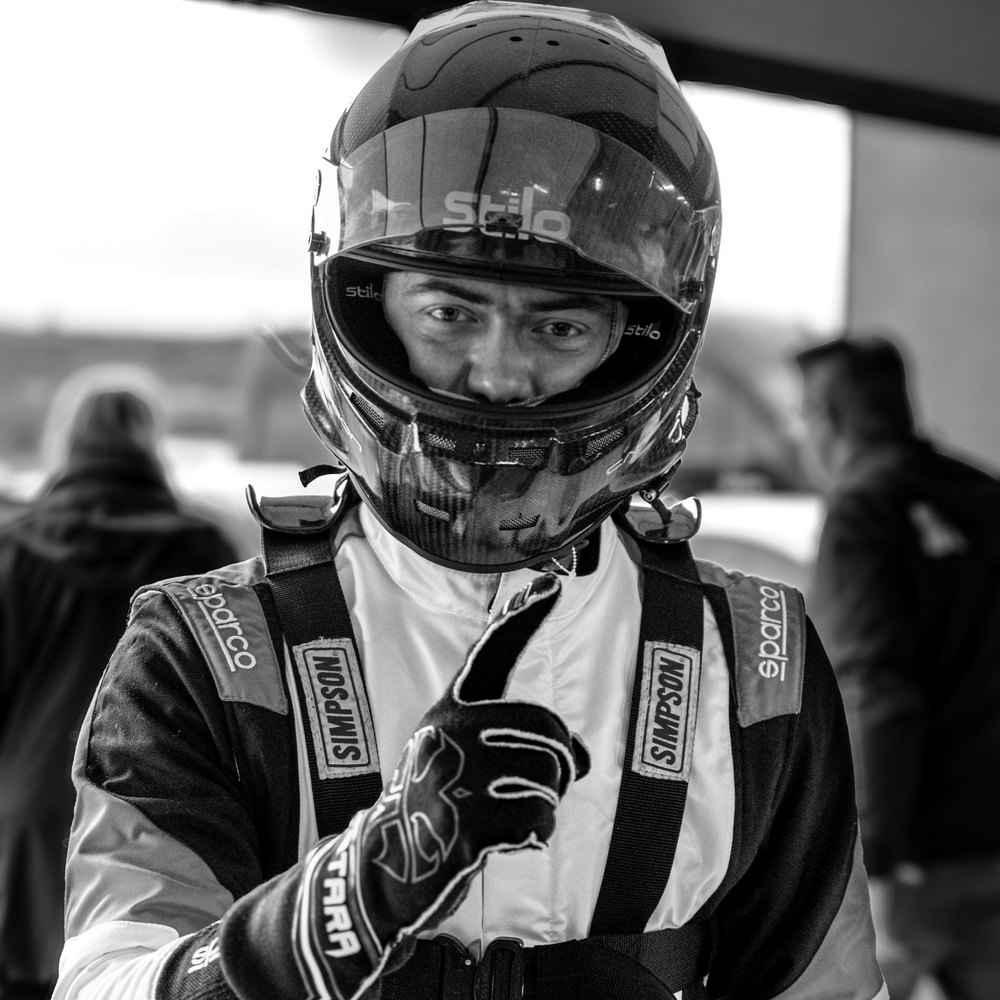
The first time I wore a heart rate strap in a kart final, I averaged 168 bpm for 25 minutes with peaks over 180. I was sixteen and thought I was fit because I played football twice a week. I was not fit, I was young. There is a difference, and it shows up in the last five laps of every race, when the tyres go off, the kart starts sliding, and the driver who trained properly is still braking at the same marker while everyone else drifts half a tenth per lap away.
Racing driver fitness training is its own discipline. It is not bodybuilding, it is not marathon running, and it is not the generic circuits your gym sells as athlete training. Below is how drivers actually prepare, what matters in karting versus cars, and a weekly schedule that works if you also have school or a job, because most of us do.
What a race actually asks of your body
Strip away the mystique and a race is a specific physical job with measurable demands:
- Sustained heart rate. In karting and single seaters you sit at 160 to 185 bpm for the full stint. In a 40 minute GT4 or Porsche Cup stint you might average slightly lower but hold it far longer. This is closer to a running race than most people expect from sitting down.
- Heat. A closed GT cockpit reaches 50 degrees Celsius on a summer weekend. Even in a kart, a full suit, helmet and rib protector in July means you finish a final two kilograms lighter than you started, mostly water.
- Repeated g-forces. A senior kart on grippy rubber pulls around 2 g laterally, every few seconds, for the whole race, with zero head support. A modern F4 or FRECA car with downforce goes well beyond that in fast corners.
- Concentration under fatigue. Your brain runs on the same fuel and oxygen as your muscles. When your heart rate is redlined and your core temperature climbs, reaction time and decision making degrade first. Fitness is not about muscles looking good in the suit, it is about protecting your judgement in lap 18.
Everything below trains one of those four demands. If an exercise does not, it is optional.
Neck and core, the parts that fail first
Ask any driver what hurt after their first full test day and the answer is the neck, then the ribs, then the forearms. A kart has no headrest and no power steering. Every corner, your neck muscles hold a five kilogram head plus a helmet against 2 g of lateral load. Untrained, that combination fails within 15 to 20 laps, and a failing neck means your head lolls, your eyes stop tracking the apex properly, and your lap time follows.
The good news: the neck responds fast to training. What works:
- Isometric holds. Lie on a bench with your head off the edge, hold your head level against gravity, front, back and both sides. Start with 3 sets of 20 to 30 seconds per direction, twice a week.
- Band or harness work. A head harness costs 40 to 80 euro and lets you add resistance progressively. A partner pushing against your head through a towel works too and costs nothing.
- Rotational holds. Racing load is rarely straight sideways. Add holds at 45 degrees and slow controlled rotations under light band tension.
The core matters for the same reason, but train it for what racing actually needs: resisting rotation and side flexion, not doing sit ups. Pallof presses, side planks, suitcase carries and dead bugs beat crunches every time. In a kart the core also protects your ribs against the seat, which anyone who has raced a bumpy street circuit with bruised ribs will confirm is worth every rep.
One warning from experience: do not go from nothing to daily neck training. Muscles adapt in weeks, tendons take months. Two focused sessions a week is plenty for the first three months.
Cardio, the base everything sits on
Your aerobic base decides how well you tolerate heat, how quickly you recover between sessions on a race day, and how stable your heart rate stays during a stint. The driver whose heart rate sits at 165 in the race has more brain capacity left than the one pinned at 185 doing the same lap time.
The structure that works for most drivers:
- Two or three easy sessions per week of 40 to 60 minutes, running or cycling, at a pace where you can still talk. This zone 2 work is boring and it is also where the base gets built. Cycling is popular among drivers for a reason: high volume with low impact on knees and ankles.
- One interval session per week. For example 6 rounds of 3 minutes hard with 2 minutes easy. This trains the ability to hold a high heart rate, which is exactly what a final is.
- A heart rate strap, 50 to 90 euro, is the single best value purchase in racing fitness. Wrist sensors are fine for daily life but drift badly at high intensity.
For heat, nothing replaces actually driving in heat, but you can prepare. In the weeks before a hot race, finish a couple of easy sessions with an extra layer on, or use a sauna after training if you have access to one. Heat adaptation is real and takes roughly two weeks to build. Pair it with a proper hydration plan, because fitness does not help if you turn up to the grid already a litre down. I wrote separately about eating and drinking on a race day, and it matters more than most drivers admit.
Grip and forearms
Forearm pump is the karting complaint nobody warns you about. A kart in the wet, or any kart on a high grip track, hammers your grip strength, and once your forearms pump up you lose steering precision exactly when you need it most. Car drivers get it too, especially in anything without power steering and in long stints.
Cheap and effective:
- Dead hangs from a pull up bar, 3 sets to near failure, twice a week.
- Farmer carries with heavy dumbbells, which also train the core and the traps you brace with in the seat.
- Wrist roller, buy one for 20 euro or make one from a broomstick, rope and a weight plate.
- A bucket of rice to dig and twist your hands through. It looks ridiculous and it works, climbers have used it for decades.
Reaction and vision work
Reaction lights look great on Instagram, and a professional light board costs more than a set of tyres. The honest version: reaction training helps, but it is the least important thing on this page, and you do not need equipment to do it. A tennis ball bounced against a wall and caught with alternating hands, juggling, or a partner dropping a ruler for you to catch trains the same pathways. Ten minutes, two or three times a week, is enough.
Vision work is underrated in comparison. Racing is a scanning task: mirrors, apex, exit, pit board, all while at 180 bpm. Practise deliberately looking further ahead on your sim laps, and use sim racing as concentration training by running full length races, not just hot laps. The fitness carryover from the sim is close to zero, the mental stamina carryover is real.
Karting and cars ask different questions
The training emphasis shifts as you move up, and a lot of drivers keep training for the category they left:
- Karting (IAME X30, Rotax Max, OK). Neck, forearms, ribs and heat tolerance dominate. Races are short and brutally intense, 10 to 25 minutes at maximum heart rate, several times a day on a race weekend. Interval style cardio matches the demand well. Bodyweight matters too, because in karting every kilogram is lap time, which is exactly why nutrition needs to be managed properly rather than crash dieted.
- Junior single seaters (F4, FRECA, GB3). Downforce multiplies neck load well past anything a kart does, braking forces climb to the point where left leg strength becomes a real limiter, and stints stretch to 30 minutes. Neck training volume roughly doubles, and single leg pressing work enters the programme.
- GT and club racing (GT4, Porsche Cup, club events). Heat endurance is the defining demand. Stints of 40 to 60 minutes in a closed car in a triple layer suit reward the drivers with the biggest aerobic base. Neck load is lower than a formula car but the concentration demand in traffic is relentless.
If you are a karting parent reading this for your kid: under 14, keep it to general athleticism, swimming, gymnastics style bodyweight work and sport variety. Structured neck loading and heavy gym work can wait. The kids who specialise earliest are rarely the ones still racing at 20.
A realistic training week
Most drivers are not full time athletes. You have school, a job, or both, plus actual racing. This week takes about six and a half hours and covers every demand above. I follow a version of this myself, and it is the same logic behind the training and nutrition plans I built into DriversPerformance, made for drivers juggling school, work and a race calendar rather than for full time athletes.
| Day | Session | Focus | Time |
|---|---|---|---|
| Monday | Easy run or bike, then neck isometrics | Aerobic base, neck | 45 + 15 min |
| Tuesday | Strength A: squats or split squats, presses, Pallof press, carries | Legs, core, grip | 60 min |
| Wednesday | Rest or easy 30 min spin, mobility work | Recovery | 0 to 30 min |
| Thursday | Intervals: 6 x 3 min hard, 2 min easy, then grip work | Race heart rate, forearms | 40 + 15 min |
| Friday | Strength B: hinges, rows, side planks, neck harness | Posterior chain, neck, core | 60 min |
| Saturday | Long easy ride, or race or test day | Aerobic base | 90 min |
| Sunday | Full rest, stretching, plan the week | Recovery | 20 min |
Rules for making it stick: swap days freely to fit your life, never stack the interval session the day before driving, and drop volume by half on race weeks rather than skipping entirely. Consistency across months beats any perfect single week. Three sessions done every week for a year will put you ahead of ninety percent of your grid.
Recovery decides whether any of it works
Training is the stimulus, recovery is where you actually get fitter. Sleep is the biggest lever by a distance: under seven hours a night and your reaction time, heat tolerance and mood all degrade, which is a bad combination in a sport where mistakes cost real money. Since I started tracking sleep and heart rate variability with a WHOOP, the pattern is embarrassingly clear, my worst qualifying sessions line up with my worst sleep weeks. That data now feeds a daily race readiness score I check before deciding whether to train hard, train easy or rest, and I have written more about what HRV and sleep actually tell a driver if you want the detail.
Start smaller than you think you should. Pick three sessions from the week above, do them every week for a month, and add from there. The fitness gap between drivers is rarely talent for training, it is that one driver did the boring sessions in November and February and the other one did not. Come the last five laps of the first final of the season, everyone on the grid finds out which one you were.