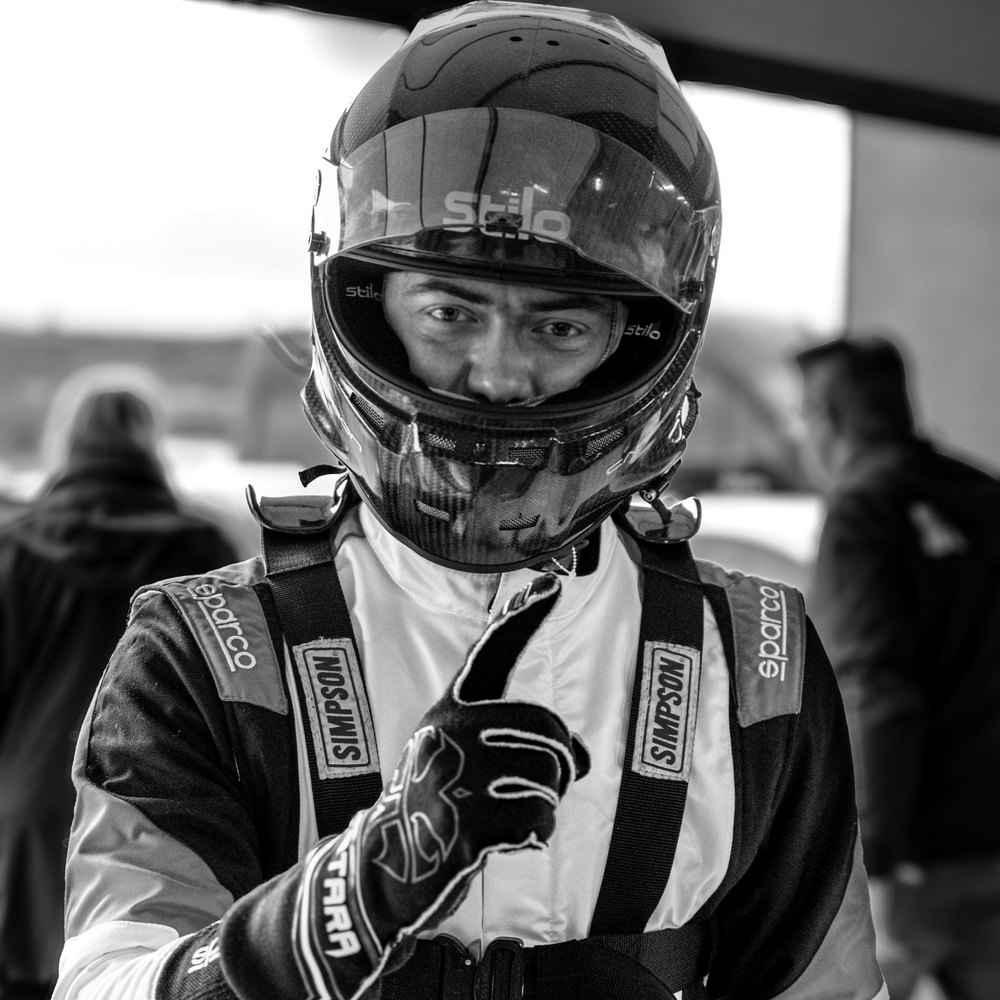
I have thrown away qualifying sessions because of what I ate three hours earlier. A heavy lunch at Genk in 30 degree heat, two decent laps, then ten laps of fighting my own stomach instead of the kart ahead. Race day nutrition is not complicated, but most of the paddock gets it wrong in the same predictable ways: too little water before the heat arrives, food that is too heavy and eaten too late, caffeine at random moments, and no plan at all for the long gaps between heats.
This is the structure I use myself and the one I would hand to any driver, from an IAME X30 Junior doing three heats and a final to a GT4 driver climbing into a 50 degree cockpit for a 60 minute stint. Portions differ per body. The structure does not.
The evening before: fill the tank, keep it boring
Saturday evening before a race Sunday has one job: stock glycogen and set up a proper night of sleep. That means a carbohydrate based dinner you have eaten a hundred times before. Pasta or rice with a lean protein source, vegetables, a normal portion, not a mountain. You are racing in 15 to 25 minute blocks, not riding the Tour de France, so there is no need to force food in.
Three details matter more than the menu. Salt your food properly, because tomorrow you will sweat most of that sodium straight out again. Drink an extra half litre of water with dinner. And skip alcohol completely, even the one beer with the mechanics, because it measurably wrecks exactly the deep sleep you need. Sleep is the single biggest lever on race day performance, bigger than anything on your plate, and it shows up directly in your lap times. It is also why I built a daily race readiness score into DriversPerformance: sleep and recovery data from a WHOOP strap tell you before breakfast how much margin you actually have that day.
No experiments the night before. The new restaurant, the spicy curry, the enormous schnitzel at the circuit hotel: all fine on a Tuesday, all a gamble on Saturday.
Race morning: breakfast timing beats breakfast content
Most drivers obsess over what to eat and ignore when. The rule I work with is simple: a full breakfast finishes three hours before your first session on track. Two and a half hours is the absolute minimum for a proper meal. Blood that is busy digesting is blood that is not available for a brain making decisions at 160 km/h.
The meal itself is boring on purpose: oats with banana and honey, or white bread with jam and a couple of eggs if you tolerate them well. Mostly carbohydrate, some protein, low fat, moderate fibre. Add 500 ml of water. Done.
The complication is that race mornings start brutally early. If warm-up is at 8:30, a three hour window means eating at 5:30, which is not realistic when you left home at 6:00 with the kart on the trailer. So split it: a smaller breakfast two hours before the session, then a banana or a white roll with honey 60 to 75 minutes before you put your helmet on. You lose nothing by splitting the meal. You lose a lot by wolfing down a full plate 45 minutes before qualifying.
Between heats and between stints: little and often
A typical race day in IAME X30 or Rotax Max runs warm-up, qualifying, two or three heats, a prefinal and a final, spread over eight or nine hours with gaps of 45 to 90 minutes. Under nerves, most drivers eat almost nothing all day and then wonder why they fade in a final that starts at 16:30. The fix is small amounts, often: roughly 30 to 60 grams of carbohydrate per hour of waiting, from food your stomach barely notices. Bananas, white rolls with honey, rice cakes, cereal bars, a sports drink. Nothing solid in the last 45 minutes before a session if you have a nervous stomach.
A karting day on paper looks like this:
| Time | What | Why |
|---|---|---|
| 07:00 | Oats with banana and honey, 500 ml water | Full breakfast, three hours before qualifying |
| 09:00 | White roll with jam | Top up without loading the stomach |
| 10:00 | Qualifying | Running on breakfast, not on the roll |
| 11:00 | Banana, 500 ml water with an electrolyte tab | Replace qualifying sweat before the heat peaks |
| 12:15 | Small pot of cold pasta or rice from the cool box | Real food in the longest gap of the day |
| 14:00 | Heat two, then rice cakes and steady sipping | 30 to 60 g of carbs per waiting hour |
| 15:50 | Half a banana, last sips, caffeine if you use it | Light and sharp for the final at 16:30 |
Car racing stretches the same logic over longer gaps. In F4 or a Porsche Cup weekend with qualifying in the morning and the race mid afternoon, eat a light real meal (rice, chicken, nothing swimming in fat) that finishes three hours before the start, then a small top-up an hour out. In endurance racing, eat straight after your stint, not just before the next one, so digestion happens while your co-driver is doing the work.
Hydration and electrolytes in a 50 degree cockpit
A closed GT car in summer runs cockpit temperatures of 50 degrees and more, and a kart suit at Adria in July is not much kinder. Sweat losses of 1 to 1.5 litres per hour are normal in those conditions, and at around 2 percent of body mass lost you are measurably slower: reaction time, decision making and heat tolerance all degrade before you ever feel thirsty. In a sport decided by hundredths, that is free lap time being poured out through your suit.
The plan starts before the first session. Arrive hydrated, which you can check crudely but effectively by urine colour: pale, not clear, not dark. Drink 500 to 750 ml in the two hours before you get in, in small sips, not one big chug on the grid. Then add electrolytes, because plain water alone in big volumes dilutes your sodium and can leave you feeling worse. Aim for roughly 500 to 1000 mg of sodium per litre in hot conditions. A tube of electrolyte tabs costs about 10 euro and covers a full race weekend, which makes it the cheapest performance part you will buy all year.
Learn your own numbers. Weigh yourself before and after a session: every kilo lost is a litre of fluid to replace over the following hours. In a car with a drinks system, actually use it, on straights and under safety cars, instead of discovering after the flag that the bottle is still full.
Caffeine: a tool with a timing window
Caffeine genuinely works for alertness and reaction time, which is exactly why it needs discipline. The dose that is well supported is around 3 mg per kilogram of body weight, taken 30 to 45 minutes before you get in. For a 70 kg driver that is roughly 200 mg, or two to three espressos. A standard energy drink can holds about 80 mg plus a pile of sugar you do not need at that moment, so coffee or caffeine tablets give you more control.
Two warnings from experience. First, the half life of caffeine is five to six hours, so a big dose before a 17:00 final is still half in your bloodstream at 23:00, which ruins your sleep on a double header weekend and makes Sunday worse than Saturday. Nothing heavy after early afternoon if you race again the next day. Second, never try your race dose for the first time on race day. Test it at a practice day. And watch the schedule: if you dose for a 14:00 start and then sit through a red flag until 15:30, you peaked in the holding area. Dose late rather than early.
The paddock catering trap
The 9 euro paddock burger is the most expensive item at the circuit once you count what it costs you on track. Fat slows the emptying of your stomach dramatically, so the burger, the frites and the greasy panini are still sitting there three hours later, right through your final. The opposite trap is just as common: nerves kill your appetite, you eat nothing after 7:00, and by the final you are irritable, slow and wondering where your concentration went.
Both problems disappear with a cool box packed at home the night before: bananas, white rolls, honey, rice cakes, cereal bars, a pot of cold pasta, three litres of water and a tube of electrolyte tabs. The box itself is maybe 40 euro once, the contents perhaps 15 euro per weekend, and it removes every food decision from a day when your head should be elsewhere.
Cutting weight safely when your class has a minimum
Weight rules the sport at kart level. X30 Senior runs around 162 kg driver plus kart in most national series, and a driver 5 kg over the practical minimum is giving away real lap time everywhere on the circuit. The temptation for taller or heavier drivers is obvious: crash diet in race week, or sweat it out in layers of clothing on Saturday night. Both make you slower than simply carrying the weight, and the dehydration route is genuinely dangerous in a hot kart.
Losing fluid to make the scales is the worst trade in motorsport. You arrive at the final 2 percent down, which costs cognition and heat tolerance in exactly the session that pays the whole weekend. Skipping meals on race day does the same through a different door. The safe version happens weeks out, not days out: a moderate deficit of 300 to 500 kcal per day during normal training weeks, protein kept high at around 1.6 to 2 g per kilogram to protect muscle, and a body weight that stays stable across the race weekend itself, where you eat and drink completely normally. In cars there is at least ballast to bring a light driver up to the minimum; there is no ballast that helps the heavy side, which is why this belongs in your training between race weekends and in a structured training and nutrition plan, never in race week. And if a safe long term approach still cannot reach the class minimum, that is an honest conversation about class choice, not a starvation project.
The whole plan fits on an index card taped inside your kit box: boring carb dinner and an early night, breakfast finished three hours out, 30 to 60 grams of carbs per waiting hour, half a litre to 750 ml of electrolyte drink per hour of heat, caffeine 40 minutes before the session that matters, nothing fried until the flag drops. Write your own version, test it at a club race where the stakes are low, adjust the portions until it fits your body, and then stop thinking about it. On race day the plan should run itself, so your head is free for the only thing that pays: the next session.